Hyundai Inster Ireland: Range, Charging, Space and Trims Explained
Hyundai's smallest EV explained for Irish buyers: 42 or 49 kWh battery, up to 360 km WLTP range, 30 minute fast charging, four flexible seats and what to check on a used Inster.
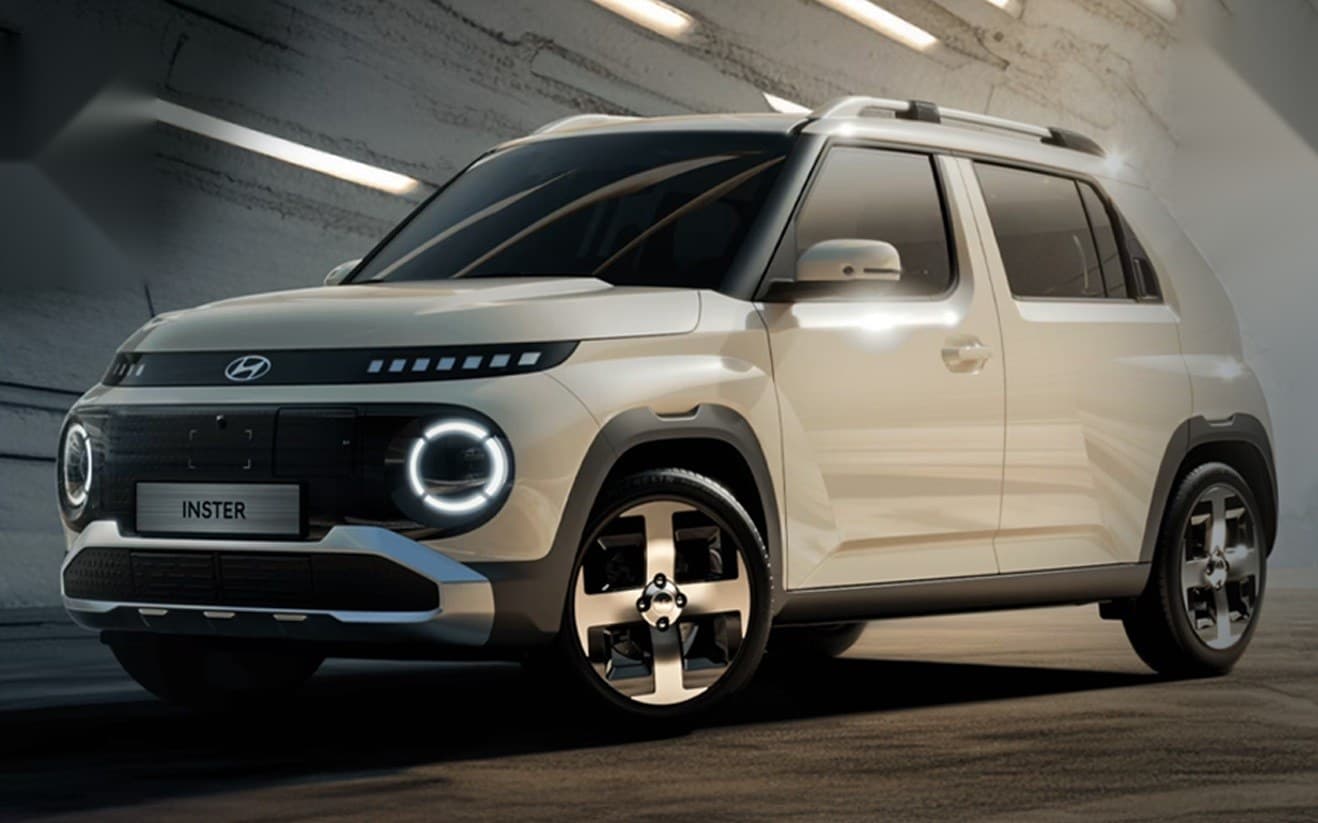
The Hyundai Inster is Hyundai's smallest electric car, and one of the most talked about small EVs in Ireland right now. It is a four seat city car with a tall, boxy SUV style body, a choice of two battery sizes and a quoted range of up to 360 km. It was named World Electric Car of the Year 2025 and Irish Small Car of the Year 2026. This guide explains the range, charging, space and trims in plain terms, and what to check if you are buying a new or used Inster in Ireland.
Quick Summary
- The Inster is an A segment electric city car with four seats and a high roof SUV look.
- Two batteries: 42 kWh or a Long Range 49 kWh. Hyundai Ireland quotes up to 360 km of WLTP range with the 49 kWh battery.
- DC fast charging from 10 to 80% takes around 30 minutes on a charger of at least 120 kW. Peak DC charging power is 85 kW; AC charging is up to 11 kW.
- Boot space is 238 to 351 litres depending on where the sliding rear seats are set (sliding and flat folding seats are on the top trim only).
- The Inster Cross adds a more rugged look and Vehicle to Load power of up to 3.6 kW.
- The launch price in Ireland was quoted from €18,995 in February 2025. Always check the current price and grant position with a dealer.
What is the Hyundai Inster?
Hyundai describes the Inster as an all electric compact SUV or city EV. In practice it is a small hatchback, built on a flat EV floor, with a tall roof and short overhangs. That shape is what makes it interesting: it is short enough for tight streets and multi storey car parks, but the interior is far roomier than its footprint suggests.
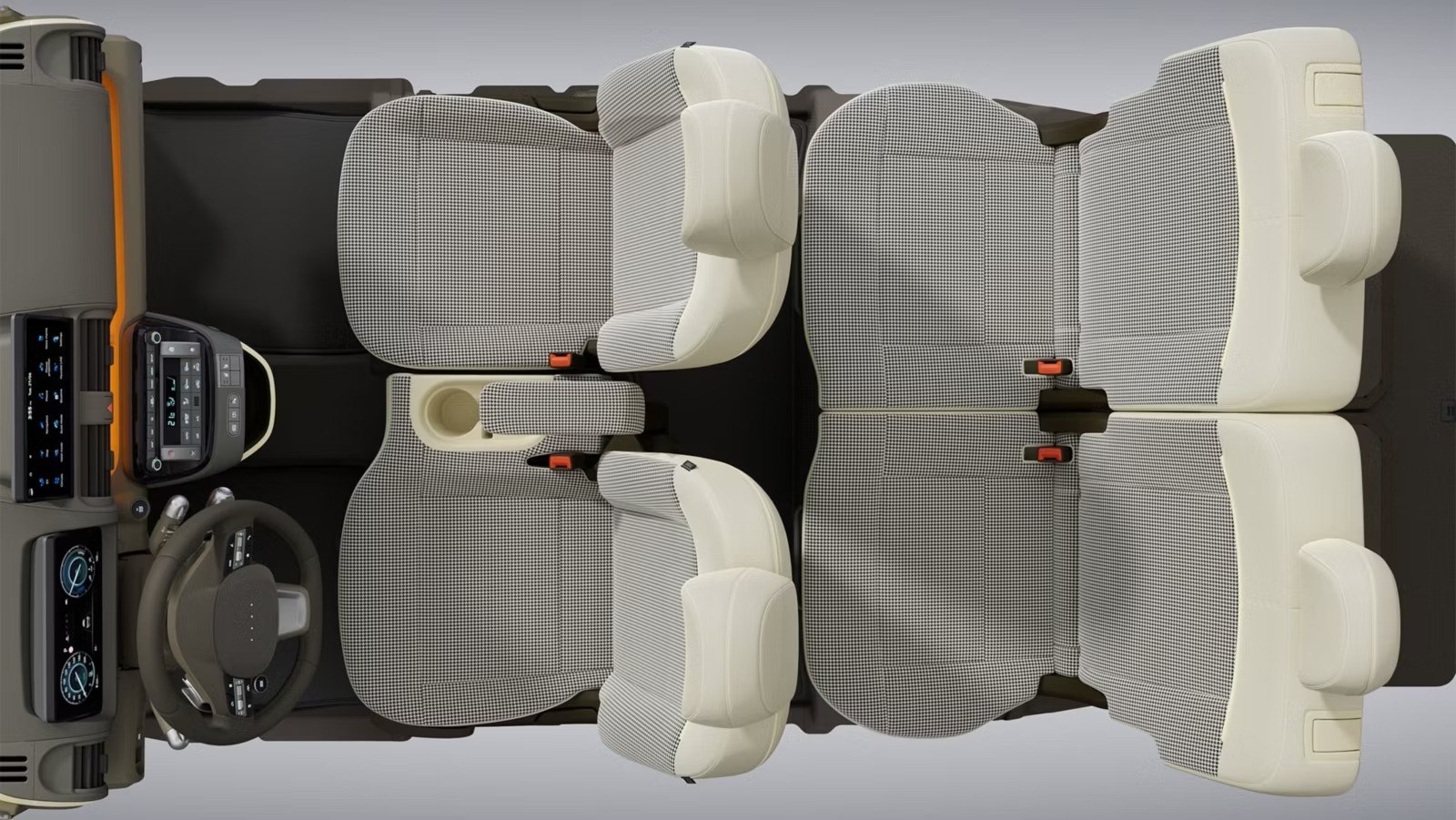
It is a strict four seater. Every seat has an adjustable head restraint, the driver gets manual seat height adjustment, and on the top trim all four seats can fold completely flat. Hyundai also offers an optional front bench seat on some versions.
Inside, the dashboard is built around two 10.25 inch screens: a digital instrument cluster and a touchscreen with navigation. There is a wireless phone charging pad, and optional heated front seats and heated steering wheel, which are worth looking for if you do a lot of cold morning driving.
Battery, range and performance
The Inster comes with one of two lithium ion batteries:
| Item | Standard | Long Range |
|---|---|---|
| Usable battery | 42 kWh | 49 kWh |
| Motor output | 71 kW (97 hp) | 85 kW (115 hp) |
| Torque | 147 Nm | |
| Official WLTP range | 300 to 360 km depending on version (up to 360 km with 49 kWh) | |
| Top speed | 150 km/h | |
Hyundai Ireland quotes 0 to 100 km/h in 10.6 seconds. Published figures for the two versions are 10.6 and 11.7 seconds, so the heavier, more powerful Long Range car and the lighter Standard car end up close in real use. Kerb weights are listed at 1,305 kg and 1,423 kg.
For most Irish buyers the real question is range. WLTP figures are a laboratory number; in winter, on the motorway or with the heater running you should expect less. As a rough rule, the 42 kWh version suits people who mainly drive in and around a town with home charging, while the 49 kWh version is the better choice if you regularly do longer trips such as Athlone to Dublin and back, or you cannot charge at home every night.
Charging the Inster
Charging is one of the Inster's strong points for a car of this size.
- DC fast charging: Hyundai says 10 to 80% takes around 30 minutes on a DC charger of at least 120 kW. The car's own peak DC charging power is 85 kW, so a 50 kW public charger will take longer than the headline figure.
- AC charging: the on board charger accepts up to 11 kW. Hyundai quoted around four hours for a full AC charge on the Standard battery, with the Long Range battery taking about 35 minutes longer, on a suitable AC supply.
- Home charging: most Irish home chargers are single phase 7 kW units, which is the realistic overnight setup for most owners. If you are putting in a home charger, read our guide to the SEAI home charger grant first.
Energy consumption is quoted at 15.3 kWh per 100 km. That is efficient, and it is the main reason running costs per kilometre are low when you charge at home on a night rate.
Space and practicality
This is where the Inster stands out against other cars of the same length.
- Boot: 238 to 351 litres. The rear seats slide forward by 16 cm to trade rear legroom for boot space.
- Flat folding seats: all seats fold flat for long loads or a nap on a road trip. Hyundai notes that the flat folding and sliding rear seats are on the top trim only, so check the exact specification of any car you look at.
- Rear seats: split 50:50, with sliding and reclining on the versions that have them.
- Seating: four seats, not five. If you regularly carry three children in the back, the Inster is not the right car.
The tall roof makes it easy to get in and out, and fitting a child seat is simpler than in a low hatchback. The short length makes parallel parking on a busy street much less stressful.
Inster or Inster Cross?
The Inster Cross is the more adventure styled version. It gets unique 17 inch alloy wheels, black wheel arch cladding, different bumpers with a skid plate and an exclusive matte green paint, Amazonas Green Matte. It can be specified with a roof basket.
The Cross is also the version that offers Vehicle to Load (V2L). A converter plugs into the charging port, and there is an interior socket, both supplying up to 3.6 kW to power or charge devices such as a laptop or an e scooter. If V2L matters to you, make sure the car you are buying is actually a Cross with that feature.
Lower trims of the standard Inster run on 15 inch steel wheels with hubcaps or 15 inch alloys; higher trims get 17 inch alloys. Bigger wheels look better but usually take a little off the real world range.
Price and value in Ireland
When the Inster arrived in Ireland in February 2025, the launch price was quoted from €18,995. Prices, grants and dealer offers change, so treat that as a reference point only and confirm the current price and any SEAI grant position with a Hyundai dealer before you buy.
Hyundai Ireland states a 5 year unlimited mileage warranty across its models as standard. Battery warranty terms are set separately by the manufacturer, so ask for the battery warranty in writing, especially on a used car.
Because the Inster is a recent model, used examples on the Irish market are mostly young cars. You can browse electric cars for sale on EcoSteer or see all used Hyundai cars for sale in Ireland.
Buying a used Inster: what to check
- Battery size. Confirm whether the car has the 42 kWh or 49 kWh battery. It makes a real difference to range, and the trim name alone does not always tell you.
- Trim and seats. If you want the sliding rear seats, flat folding seats or V2L, check the exact trim. These features are not on every version.
- Charging cable and adaptor. Make sure the Type 2 charging cable is included, and on a Cross the V2L adaptor if the car is listed with it.
- Battery health and charging test. Ask a Hyundai dealer for a battery health report, and if possible test a DC charging session to make sure the car accepts a fast charge normally.
- Software and recalls. Ask the dealer to check the VIN for outstanding software updates or recalls. The Road Safety Authority publishes vehicle recalls in Ireland.
- Service history and warranty transfer. Get the service record and confirm how much of the manufacturer warranty remains.
- Tyres and wheels. Small EVs can be hard on tyres because of instant torque. Check tread depth and kerb damage on the alloys.
- History check. As with any used car, run a history check for finance, write off history and mileage.
If you are still deciding between electric, hybrid and petrol, our electric vs hybrid vs petrol guide compares the running costs for Irish drivers.
Who is the Inster for?
The Inster makes most sense if you:
- mostly drive in town or on regional roads, with the odd longer trip;
- can charge at home, ideally on a night rate;
- want a small car that is easy to park but still roomy for four adults;
- like the idea of a compact SUV look without the size or weight of a bigger crossover.
It makes less sense if you need five seats, do long motorway commutes every day without home charging, or tow.
Frequently asked questions
What is the range of the Hyundai Inster?
Hyundai Ireland quotes up to 360 km on the WLTP cycle with the Long Range 49 kWh battery. Official figures across the versions are 300 to 360 km. Real world range will be lower in cold weather and at motorway speeds.
How long does the Hyundai Inster take to charge?
From 10 to 80% in around 30 minutes on a DC charger of at least 120 kW. On AC, Hyundai quoted around four hours for a full charge on the Standard battery, with the Long Range battery taking about 35 minutes longer.
How many seats does the Hyundai Inster have?
Four. All four seats can fold flat on the top trim, and the rear seats slide forward by 16 cm to increase boot space from 238 to 351 litres.
What is the difference between the Inster and the Inster Cross?
The Inster Cross has a more rugged look with 17 inch alloys, black wheel arch cladding, a skid plate and an exclusive matte green paint. It is also the version that offers Vehicle to Load power of up to 3.6 kW.
How much does a Hyundai Inster cost in Ireland?
The launch price was quoted from €18,995 in February 2025. Prices and grants change, so check the current price with a Hyundai dealer. Used examples are listed by dealers on EcoSteer.
External sources
- Hyundai Ireland, New INSTER and INSTER Cross pages (hyundai.ie)
- CompleteCar.ie, Hyundai Inster electric car technical specifications
- Advertiser.ie (Galway), "Pricing revealed for Hyundai Inster EV" (February 2025)
- Road Safety Authority, vehicle recalls (rsa.ie)
Comments
No comments yet — be the first to join the conversation.