
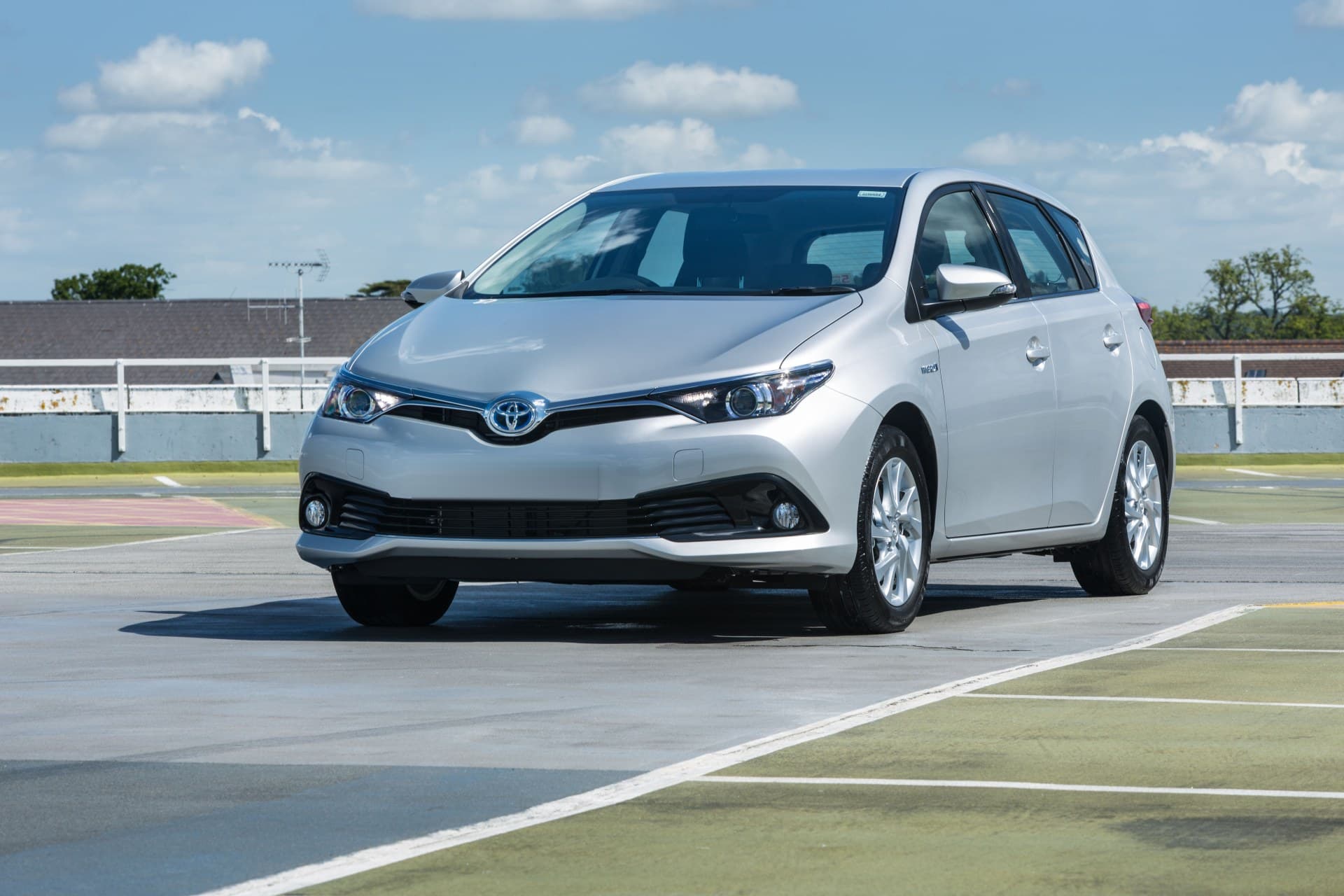
Quick Summary
- The Toyota Auris replaced the Corolla hatchback in 2007 and was sold until 2019, when the Corolla name returned for the current hatchback.
- The Auris Hybrid arrived in 2010 and was built at Toyota's Burnaston plant in England. Toyota described it as the first full-production hybrid car built in Europe.
- Second generation cars came from late 2012, with a Touring Sports estate added in 2013 and a facelift in 2015.
- Irish recalls covered the accelerator pedal, power window switch, hybrid software and a passenger airbag inflator. The RSA's lists for 2025 and 2026 include no Auris campaign.
- On a hybrid, a Toyota Hybrid Health Check can renew battery cover one year or 15,000 km at a time, up to the car's 15th anniversary.
The Toyota Auris is one of the most common used family hatchbacks in Ireland, and the hybrid version is the one most buyers look for. It is easy to drive, simple to own and well supported by Toyota dealers and independent garages. This guide covers the Auris generations, the petrol, diesel and hybrid engines, the recalls to check and a checklist for buying one used. Browse used Toyota cars for sale on EcoSteer, or see used hybrid cars on EcoSteer if you want a self-charging hybrid.
Toyota Auris generations
Toyota announced the Auris in October 2006 as the successor to the Corolla in its hatchback range, and unveiled it at the Bologna motor show that December.
| Generation | Years | What changed |
|---|---|---|
| First | 2007 to 2012 | On sale from early 2007 with petrol and diesel engines and a five-star Euro NCAP rating. Revised in 2009 and facelifted for the 2010 model year. The Auris Hybrid went on sale in 2010. |
| Second | 2012 to 2015 | Revealed at the Paris motor show in September 2012, with production starting at Burnaston in November 2012. Offered as a hybrid, petrol or diesel. The Touring Sports estate was unveiled in March 2013. |
| Second, facelift | 2015 to 2019 | Restyled in July 2015 with a new 1.2T turbo petrol engine, a 1.6 D-4D diesel and the optional Toyota Safety Sense pack. |
Engines: petrol, diesel or hybrid?
Toyota's own model timeline lists a wide range of engines over the Auris's life. Check the exact engine on the vehicle registration certificate, because versions varied by year.
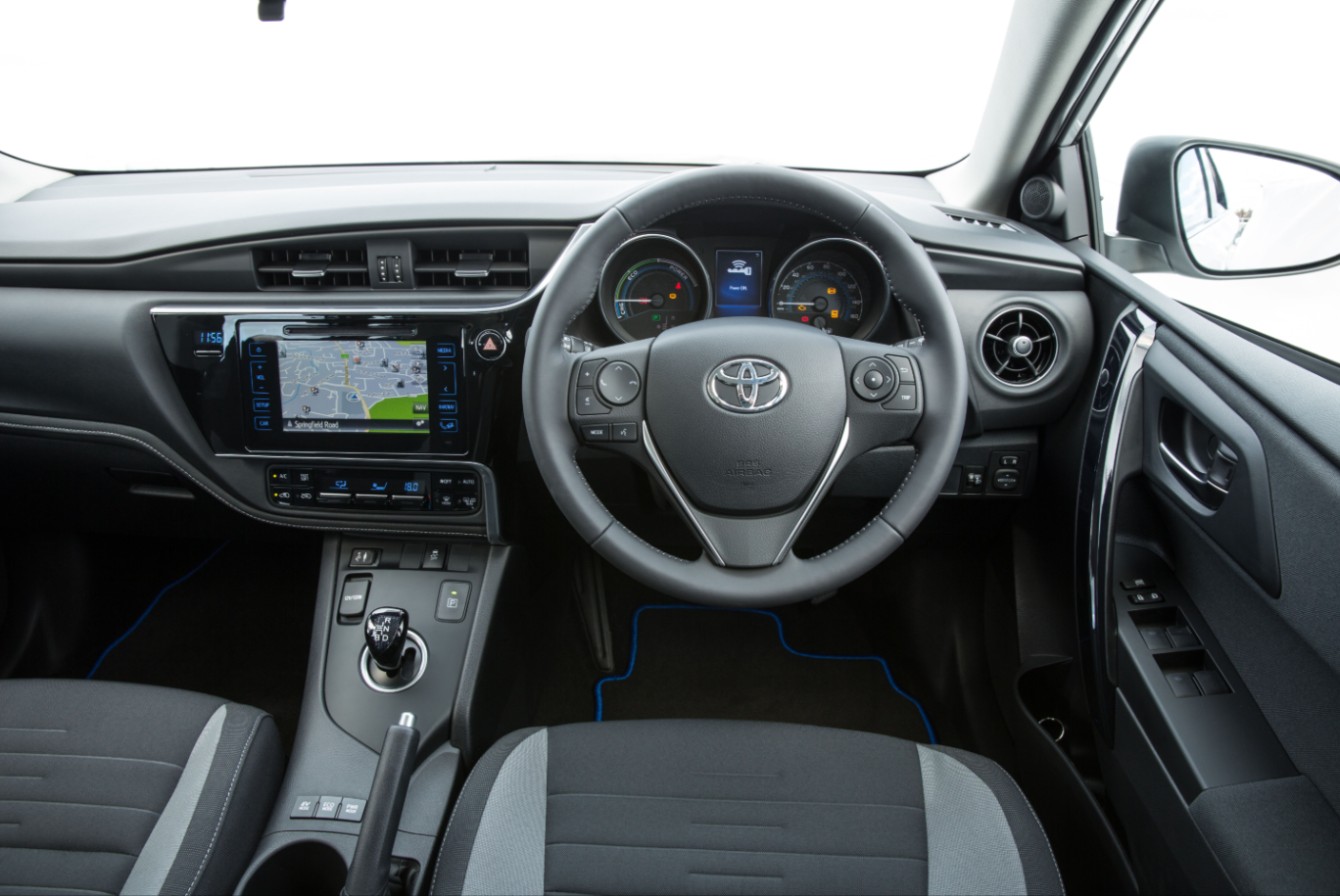
- Hybrid: a 1.8 litre petrol engine with an electric motor and an automatic transmission. By the 2015 facelift it produced 134bhp in total and was the most popular version for buyers who wanted low running costs. It suits mixed town and suburban driving.
- Petrol: early cars used 1.4 and later 1.33 Dual VVT-i engines (the 1.33 with Stop and Start from late 2008), with a 1.6 Valvematic added in 2009. Facelifted cars from 2015 have the 1.2T turbo petrol.
- Diesel: first generation cars were offered with 1.4, 2.0 and 2.2 litre D-4D diesels, and the 2015 facelift brought a 1.6 D-4D. These suit higher mileage drivers rather than short local trips.
The five-door hatchback is the usual body style, while the Touring Sports estate from 2013 adds a longer load area for families.
Recalls on the Auris in Ireland
All of these recalls were fixed free of charge by Toyota dealers. The key question on a used car is whether the work was actually done.
- 2010: accelerator pedal recall covering about 26,000 Toyotas from eight ranges in Ireland, including the Auris. The 1.4 petrol Auris was not included.
- 2012: power window switch recall covering 10,357 Auris built between September 2006 and December 2008.
- 2015: hybrid system software update for 589 Auris Hybrid and Prius cars in Ireland.
- 2018: 1,893 Corolla and Auris cars built from October 2006 to 2012 that may have had a replacement front passenger airbag inflator fitted the wrong way round.
- 2018: 1,289 Prius, Prius+ and Auris hybrids built between October 2008 and November 2014 that might not switch to their fail-safe driving mode after a fault.
The RSA's published recall lists for 2025 and 2026 include no Auris campaign. For dates, causes and how to check a VIN, read our guide to Toyota Auris common problems in Ireland.
Hybrid battery checks
The hybrid system has a good reputation, but on an older car you need to know how it has been looked after. Toyota Ireland's Hybrid Health Check, carried out with each Toyota Hybrid Service, includes a hybrid system diagnostic, a battery health check, a battery insulation test, a 12 volt battery test and a cooling system check. After each check in the Toyota network, Hybrid Battery Extended Care covers the hybrid battery for one year or 15,000 km, whichever comes first, up to the 15th anniversary of registration. Ask the seller for recent results, or pay for a check before you buy, and make sure the battery cooling vent near the rear seats is not blocked.
Buying a used Toyota Auris in Ireland
- VIN recall check: ask a Toyota dealer to check for open recalls, especially on cars built from 2006 to 2014.
- Service history: regular stamps or invoices, and on hybrids, Toyota network Hybrid Services for the battery cover.
- Windows and switches: test every electric window from the driver's switch panel.
- Brakes: hybrids use their brakes less, so the discs can corrode. Look for rust on the disc faces and listen for grinding.
- Warning lights: all lights should go out after start-up, and a hybrid should show READY without fault messages.
- Clutch and diesel filter: on manual cars check the clutch, and on diesels ask how the car was used, because short trips can clog the particulate filter.
- Imports: if the car came from the UK or Japan, confirm VRT has been paid and check its history.
NCT and paperwork
Check the NCT certificate and its expiry date, and make sure the vehicle registration certificate matches the engine and fuel type of the car in front of you. A mileage that makes sense against the NCT history is a good sign. Our guide on how to pass the NCT first time lists the most common failure points.
Is a used Toyota Auris right for you?
A 2015 to 2019 facelifted hybrid with a full Toyota service history is the safest choice for most drivers, while a diesel suits long commutes. If you want something newer, the Toyota Corolla replaced the Auris in 2019, and the Toyota Prius shares much of its hybrid technology. For more space, the Toyota Avensis is the larger family car of the same era. Compare used Toyota cars on EcoSteer and hybrid cars on EcoSteer before you decide.
Sources
- Toyota UK Media: Auris timeline
- Toyota UK Media: The new Toyota Auris (2015)
- Toyota Ireland: Hybrid Service
- RTÉ: Toyota recalls 26,000 cars in Ireland (February 2010)
- TheJournal.ie: Toyota recall of Irish cars (October 2012)
- CompleteCar.ie: Toyota recalls Prius and Auris hybrid models (July 2015)
- JOE.ie: Toyota voluntary recall of Corolla and Auris (June 2018)
- CompleteCar.ie: Toyota Prius, Prius+ and Auris models recalled (October 2018)
- RSA: Recalls by manufacturer (2026)
Toyota Auris: frequently asked questions
- Is a used Toyota Auris Hybrid a good buy?
- For most drivers, yes. A 2015 to 2019 facelifted hybrid with a full Toyota service history is the safest choice. Ask for recent Hybrid Health Check results and confirm the recalls for its build date were done.
- How long does the Auris hybrid battery last?
- There is no fixed lifespan. After each Hybrid Health Check in the Toyota network, Toyota Ireland's Hybrid Battery Extended Care covers the battery for one year or 15,000 km, whichever comes first, up to the 15th anniversary of registration.
- What replaced the Toyota Auris?
- The Corolla name returned in 2019 for the current hatchback and Touring Sports, which replaced the Auris.
- Has the Toyota Auris been recalled in Ireland?
- Yes, several times, including the 2012 window switch recall covering 10,357 Auris built between September 2006 and December 2008, two hybrid software recalls and a 2018 passenger airbag inflator recall. The RSA lists for 2025 and 2026 include no Auris campaign.
- Is there an Auris estate?
- Yes. The Touring Sports estate was unveiled in March 2013 and adds a longer load area to the second generation range.
Toyota Auris guides
- Toyota Auris Common Problems in Ireland: Recalls and What to Check
- Toyota Yaris Common Problems in Ireland: Recalls, Hybrid Checks and What to Look For
- Toyota Yaris Cross Common Problems in Ireland: Recalls, Display Fault and Hybrid Checks
- Toyota Corolla Common Problems in Ireland: Recalls, Hybrid Checks and What to Look For
Discussion
No comments yet — be the first to join the conversation.