
Quick Summary
- The Leaf was the first electric car named European Car of the Year (2011), and Irish deliveries began in February 2011.
- First generation cars (2011 to 2017) have 24 or 30 kWh batteries and an 80 kW motor. Second generation cars (2018 onwards) have 40 kWh and 110 kW, or 62 kWh and 160 kW in the Leaf e+.
- First and second generation cars use CHAdeMO for rapid charging. The third generation, due in Irish dealers from March 2026, uses CCS.
- SEAI purchase grants apply to new cars only, so there is no SEAI grant on a used Leaf.
- A 2023 recall covers Leafs built from 17 December 2017 to 30 May 2023, so ask a Nissan dealer for a VIN check.
Looking for one? Browse used Nissan cars for sale on EcoSteer and compare prices from sellers around Ireland.
Nissan Leaf in Ireland at a glance
The Nissan Leaf brought mass-market electric driving to Ireland. When Nissan opened European order books in July 2010, the Republic of Ireland and Portugal were the first two markets, and Irish deliveries began in February 2011. That makes a used Nissan Leaf in Ireland one of the easiest electric cars to find.
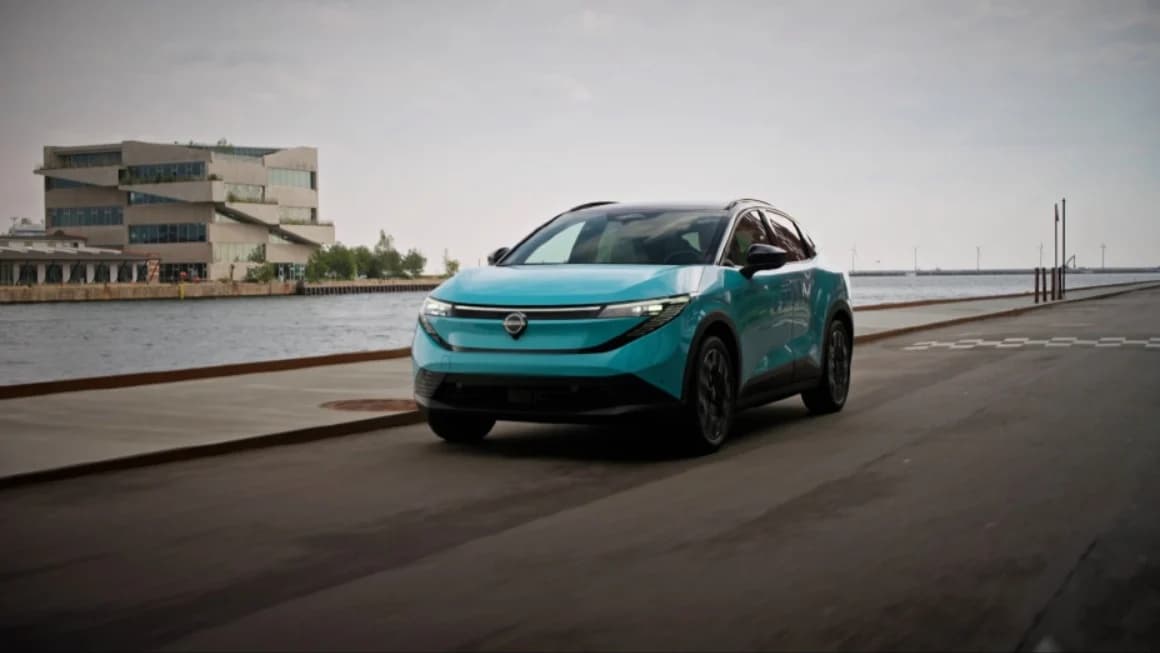
European cars came from Oppama, Japan, at first, then from Sunderland, UK, from 2013. The second generation arrived in February 2018 and the longer range Leaf e+ followed in 2019. An all-new third generation crossover, also built in Sunderland, went on pre-order in Ireland in January 2026. For a used buyer, the key checks are battery state of health, the charging connector and recall work.
Generations and production years
| Generation | Code | Years | What changed |
|---|---|---|---|
| First | ZE0 | 2011 to 2017 | Five-door hatchback with a 24 kWh battery, 175 km NEDC range at launch. The 2013 update brought Sunderland production, a heat pump in place of the PTC heater, an optional 6.6 kW on-board charger, a 370 litre boot, 199 km NEDC range and Visia, Acenta and Tekna grades. A 30 kWh battery (250 km NEDC) was added on Acenta and Tekna from January 2016. |
| Second | ZE1 | 2018 to 2025 | All-new body, 40 kWh battery, e-Pedal one-pedal driving and ProPILOT driver assistance. European deliveries from February 2018. The 62 kWh Leaf e+ followed in summer 2019. A 2022 update added Nissan's new logo, new alloys and two new colours. |
| Third | ZE2 | 2026 to date | Crossover design on the CMF-EV platform shared with the Ariya, 52 or 75 kWh batteries, CCS rapid charging, Google built-in and vehicle-to-load. Due in Irish dealerships from March 2026. |
Engines sold in Ireland
Every Leaf has one electric motor driving the front wheels, so the choice is battery size and output. Figures are Nissan's own. NEDC range figures on older cars run higher than WLTP.
First generation (2011 to 2017)
- 24 kWh, 80 kW, 280 Nm: 175 km NEDC at launch, 199 km NEDC from 2013
- 30 kWh, 80 kW: up to 250 km NEDC, from 2016
Second generation (2018 onwards)
- 40 kWh, 110 kW (150 PS), 320 Nm: 270 km WLTP combined, 6.6 kW AC charging, 50 kW CHAdeMO
- Leaf e+ 62 kWh, 160 kW (217 PS), 340 Nm: up to 385 km WLTP, CHAdeMO with 50 kW and 100 kW compatibility
Third generation (2026 onwards)
- 52 kWh, 130 kW (176 PS), 345 Nm: 436 km WLTP, CCS up to 105 kW
- 75 kWh, 160 kW (217 PS), 355 Nm: up to 622 km, CCS up to 150 kW
- Both list 11 kW AC charging on the Irish specification
Interesting facts
- The Leaf won European Car of the Year 2011 with 257 points, the first electric car to win the award.
- In 2011 Euro NCAP called it the first car of its kind to earn a five star overall rating.
- The second generation was the first car tested under Euro NCAP's 2018 protocols, including cyclist detection by automatic emergency braking. It scored five stars, with 93% for adult occupant protection. That rating expired on 1 January 2025.
- By June 2025 Nissan said close to 700,000 Leafs had been sold worldwide.
Known problems and recalls
Vehicle control module and cruise control (2023 recall)
The RSA's 2023 recall list records a Nissan Ireland recall dated 5 October 2023 for 4,213 Leafs built from 17 December 2017 to 30 May 2023. A possible fault in the vehicle control module could cause sudden, unintended acceleration after cruise control is switched off in certain conditions, raising the risk of a crash. This covers second generation cars, including the e+, so ask for proof the work was done.
Battery capacity over time
All lithium-ion batteries lose capacity with age and use. SEAI says a battery should retain 70% to 80% state of health over its lifespan, depending on the vehicle. Nissan described the 2013 24 kWh battery warranty as five years or 100,000 km against defects, with a state of health clause for capacity loss. The 30 kWh battery was covered for eight years or 160,000 km, a figure Nissan also cites for the second generation era.
What owners report
The most common theme among owners of older Leafs is reduced range as the battery ages, so a state of health check matters more than mileage. As SEAI notes, range also varies with temperature and driving style. First and second generation owners also need to plan rapid charging around CHAdeMO points.
Buying a used Nissan Leaf in Ireland: what to check
- NCT history: check the certificate and any previous fails or advisories, and that mileage reads consistently across tests and services.
- Service history: a stamped history makes warranty claims easier.
- Recall check: give the VIN to a Nissan dealer and ask whether all recalls, including the 2023 vehicle control module recall, are complete.
- Battery state of health: SEAI says you can check battery status in the infotainment system, and that a dealership can provide a battery information sheet. Ask for one.
- Battery size: 24 and 30 kWh cars look almost identical, as do 40 and 62 kWh cars. Confirm the battery from the documents, not the advert.
- Battery warranty left: work it out from the first registration date and mileage.
- Charging connector: first and second generation Leafs use CHAdeMO. ESB says CHAdeMO is at most of its fast and high power chargers, but check your regular routes.
- Home charging speed: on 2013 to 2017 cars the 6.6 kW on-board charger was optional. Nissan said it halves charging time from about eight hours to four.
Is it right for you?
A used Leaf suits drivers who want a simple, proven electric hatchback for commuting and town driving and who can charge at home. A 24 kWh car is best as a local runabout, a 40 kWh car covers most daily driving and the e+ suits regular trips between towns. For frequent long motorway runs, a CCS car gives more rapid charger choice. Electric cars are in the lowest motor tax band: Citizens Information lists €120 a year for a battery electric car, but confirm the rate for any car on Motor Tax Online.
Frequently asked questions
Can I get an SEAI grant on a used Nissan Leaf?
No. SEAI says its EV purchase grants apply to new vehicles only and cannot be claimed on second hand vehicles. Its separate home charger grant is open to homeowners with off-street parking, whether or not they own an EV.
What charging connector does a used Nissan Leaf use?
First and second generation Leafs use CHAdeMO for DC rapid charging, which ESB says is available at most of its fast chargers. The third generation, sold in Ireland from 2026, uses CCS.
How do I check the battery health on a used Leaf?
SEAI says battery status can be checked through the car's infotainment system and that a dealership can provide a battery information sheet. Ask for a state of health reading before you buy.
What is the difference between the Leaf 40 kWh and the Leaf e+?
The 40 kWh car has 110 kW (150 PS) and 270 km WLTP range. The e+ has a 62 kWh battery, 160 kW (217 PS), up to 385 km WLTP and 100 kW CHAdeMO compatibility.
Is the third generation Nissan Leaf sold in Ireland?
Yes. Nissan Ireland opened pre-orders in January 2026, with cars due in dealerships in March 2026, offering 52 kWh and 75 kWh batteries and CCS rapid charging.
Sources
- Nissan: Order books open in Europe (2010)
- Nissan: 2011 European Car of the Year
- Car of the Year 2011
- Nissan: The new LEAF (2013)
- Nissan: LEAF 30 kWh (2015)
- Nissan: Production begins in Europe (2017)
- Nissan: The new LEAF (2018)
- Nissan: LEAF e+ 3.ZERO (2019)
- Nissan UK: LEAF e+ (2019)
- Nissan: LEAF 2022 update
- Nissan: A decade of the LEAF
- Nissan: All-new LEAF (2025)
- Nissan Ireland: All-new LEAF
- Nissan Ireland: LEAF specifications
- Nissan Japan: LEAF model codes
- Euro NCAP: LEAF 2018
- Euro NCAP: LEAF assessment
- RSA: Recalls (2023)
- SEAI: Buying a used EV
- SEAI: EV grant amounts
- SEAI: Home charger grant
- ESB ecars: Fast charging
- Citizens Information: Electric vehicles
Nissan Leaf guides
- Nissan Leaf Battery Guide for Ireland: Which Battery, How to Check Its Health, and What the Warranty Covers
- Dealer Spotlight: Fermoy Nissan, Fermoy, Co. Cork
- Nissan Qashqai Common Problems in Ireland: Recalls, Faults and What to Check
- Nissan Qashqai Ireland Buyer Guide: The Mild Hybrid Costs More to Tax Than the Full Hybrid
Discussion
No comments yet — be the first to join the conversation.