Nissan Leaf Ireland Buyer's Guide: Which Battery, How to Check Its Health, and What the Warranty Covers
A used Leaf can be the cheapest way into an electric car in Ireland, or a poor buy with the wrong battery. Here is how to tell 24, 30, 40 and 62 kWh cars apart, check battery health and ask about the warranty.
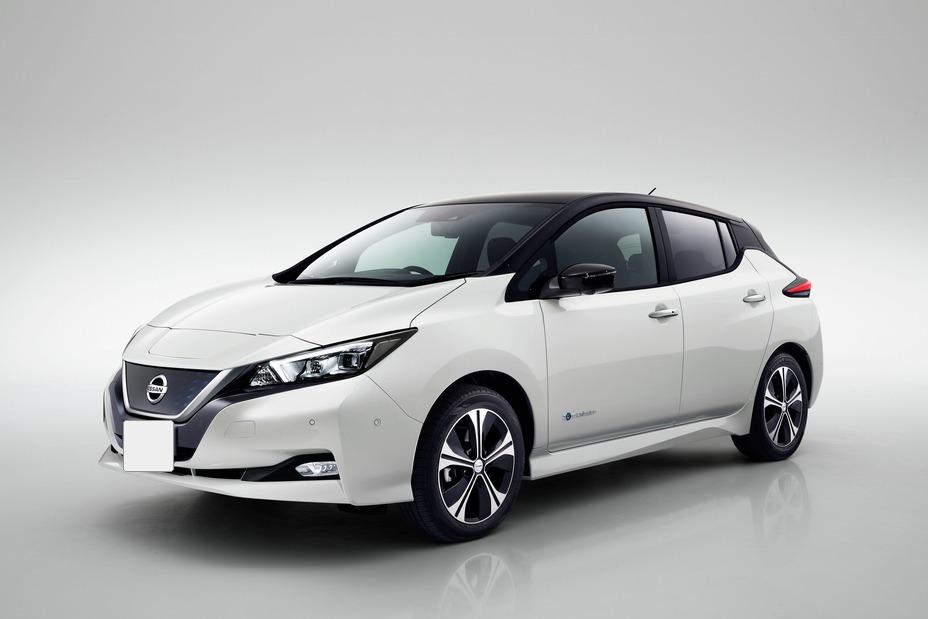
The Nissan Leaf was the electric car that most Irish drivers met first, and it is still one of the most common used EVs here. With the new third-generation Leaf arriving in Ireland in 2026 from €34,995, more older Leafs are coming onto the used market.
A used Leaf can be the cheapest way into an electric car in Ireland. It can also be a poor buy if you pick the wrong battery, so this guide is mostly about the battery: which one you are looking at, how to check its health, and what the warranty does and does not cover.
Which Leaf you are looking at
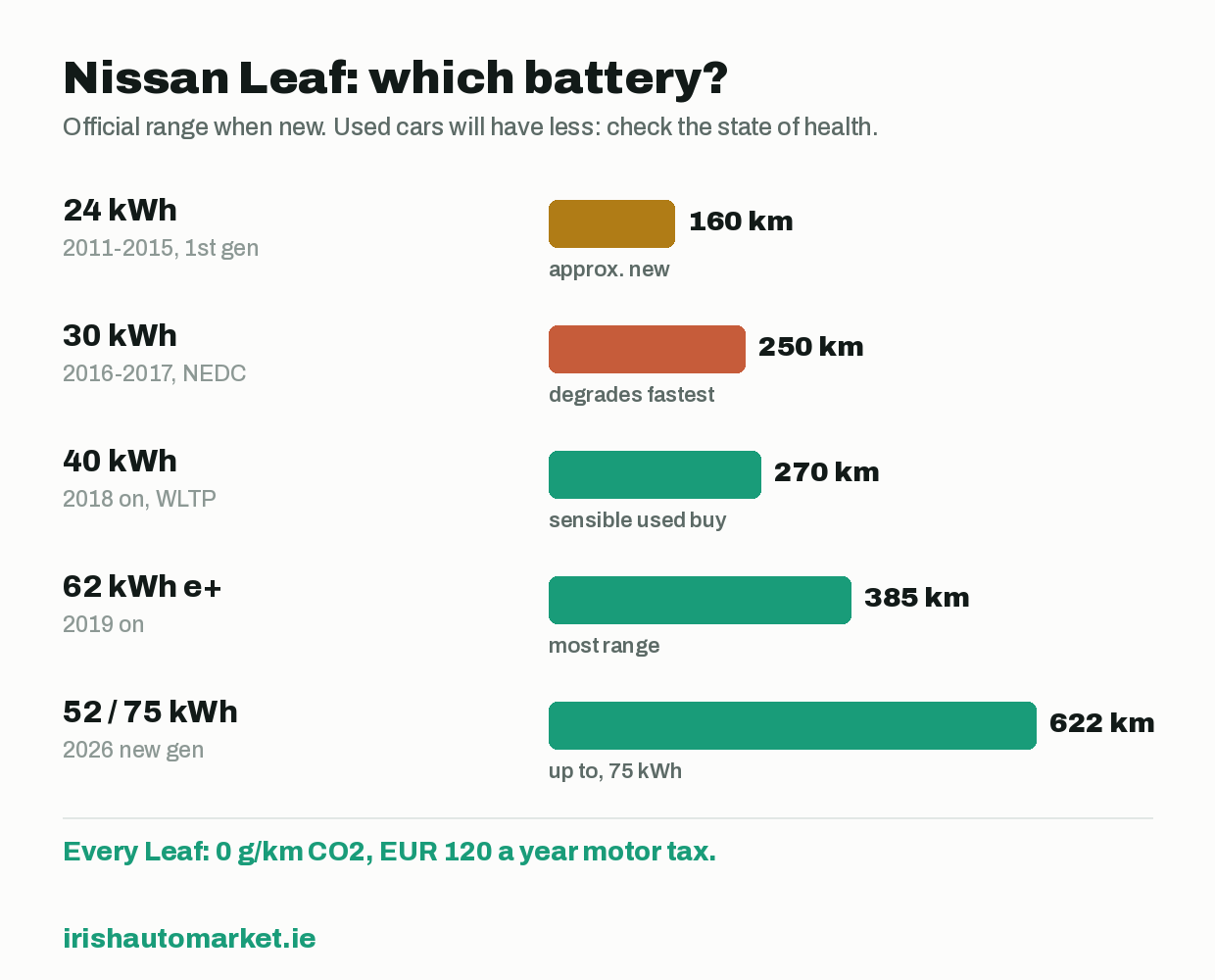
First generation, 2011 to 2017: 24 kWh and 30 kWh. The 24 kWh cars had around 160 km of range when new; most will have noticeably less now. The 30 kWh battery arrived in 2016 with an official 250 km (on the old NEDC test).
Second generation, 2018 on: 40 kWh and 62 kWh. The 40 kWh car has an official WLTP range of 270 km. The larger 62 kWh "e+" version followed. This is the generation independent Irish reviewers have recommended as the sensible used buy.
Third generation, 2026 on: 52 kWh and 75 kWh. A completely different car, with up to 440 km or 622 km of claimed range and much faster charging. It will be a while before many reach the used market.
The battery is the car
The first- and second-generation Leaf battery has no active liquid cooling. Heat is what wears a lithium-ion battery, and frequent rapid charging adds heat, so how a Leaf was used matters as much as how far it has gone.
The 30 kWh pack is the one to be most careful with. A study of 283 Leafs built between 2011 and 2017 found that 30 kWh packs lost state of health at around three times the rate of 24 kWh packs in their first two years, and heavier rapid charging was linked to lower health. Telematics data on the 40 kWh pack shows degradation levelling off, more like other modern batteries.
How to check battery health
- The dashboard bars. The small row of capacity bars beside the charge gauge (12 when new) is a rough guide. A missing bar or two on an older car is normal. Several missing is a warning.
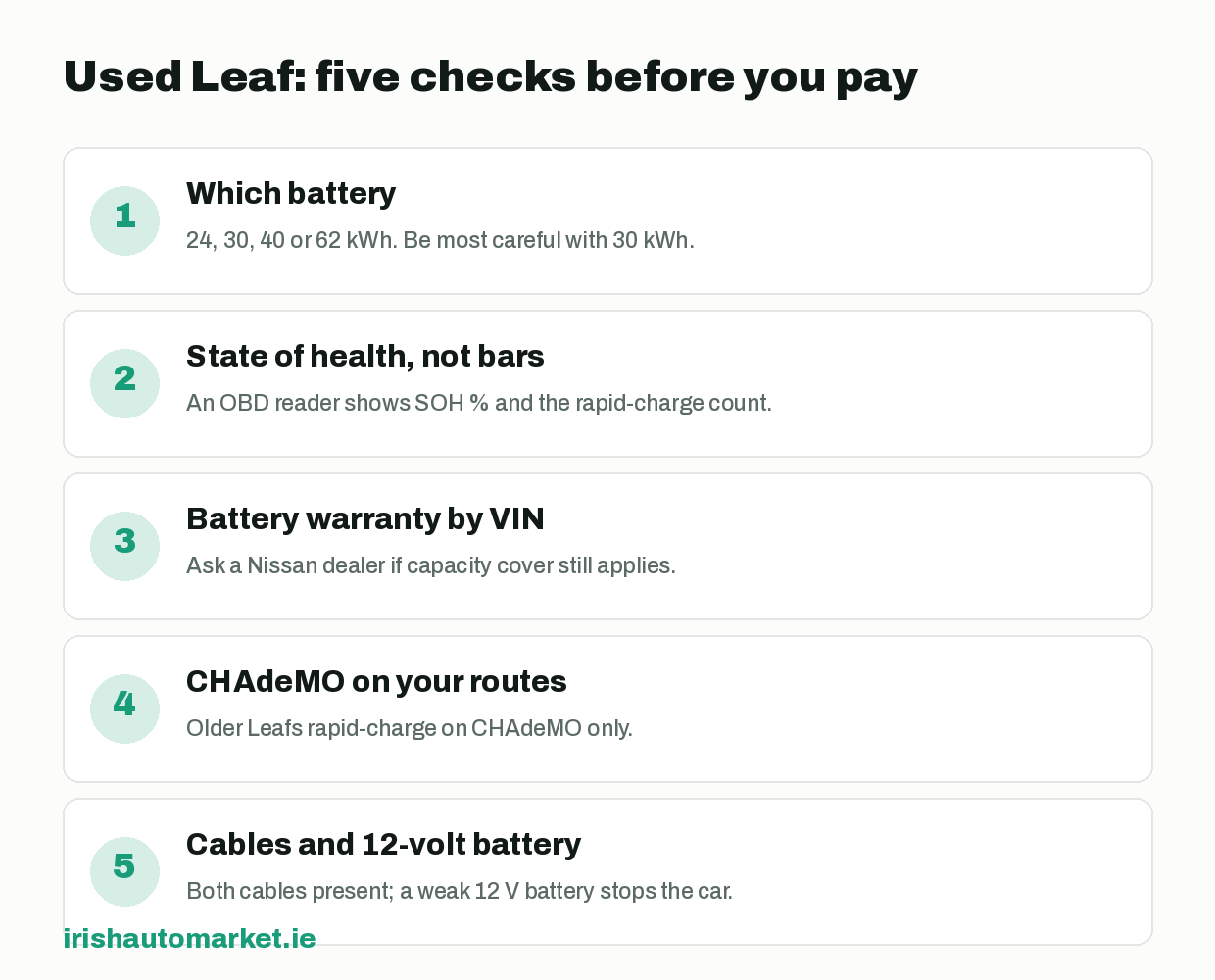
- A proper state-of-health reading. An OBD reader with an app such as LeafSpy shows the battery's state of health as a percentage, and how many rapid charges it has done. Ask the seller if you can plug one in, or ask a Nissan dealer to check the battery.
- A realistic test drive. Start from a full charge if you can, and compare the range shown with what you need for your own week.
Do not confuse state of health with state of charge. A battery showing 100% charged can still have lost a large share of its original capacity.
Battery warranty: what to ask
Nissan has offered a battery capacity warranty on the 30 kWh and later Leafs sold new in Europe: if the dashboard drops below a set number of capacity bars within eight years or 160,000 km, the battery is repaired or replaced. The terms depend on the battery size and the car's first registration date, and an imported car may not be covered in Ireland.
So before you buy, give a Nissan dealer the VIN and ask two questions: is the battery capacity warranty still running on this car, and what does the last battery check say?
Charging
The first- and second-generation Leaf use a CHAdeMO connector for rapid charging. Fewer new public chargers carry CHAdeMO than the newer CCS connector, so check the chargers on the routes you actually drive. The second-generation 40 kWh car reaches 80% in about 40 minutes on a 50 kW charger.
For most owners the real answer is home charging. A Leaf charged overnight at home is cheap to run and kinder to the battery than regular rapid charging. Check that the car comes with its charging cables.
Running costs
Every Leaf is taxed at the lowest motor tax rate, €120 a year, because it emits 0 g/km of CO2. Servicing is simpler than on a petrol or diesel car: no oil, no clutch, no exhaust.
The costs to plan for are tyres (electric cars are heavy and torquey), brakes that can corrode from lack of use, and the 12-volt battery, which can go flat and stop the car starting even when the main battery is full.
Which one to buy
- Short local driving, home charging, tight budget: a 24 kWh car with a verified state of health can work as a second car.
- Daily commuting: a 40 kWh second-generation car is the sensible default.
- Longer trips: the 62 kWh e+ gives the most range of the older Leafs.
- Be wary of: a 30 kWh car with no battery check, a high rapid-charge count, or several missing capacity bars.
What they cost
Used Leaf prices move week to week, and battery size and health move them far more than the year on the plate. Two Leafs of the same age can be very different cars. Compare current listings on ecosteer.ie, where battery details sit on the listing.
The short version
- Know which battery it has: 24, 30, 40 or 62 kWh.
- Get a real state-of-health reading, not just the dashboard bars.
- Be most careful with 30 kWh cars.
- Ask a Nissan dealer, with the VIN, whether the battery warranty still applies.
- Motor tax is €120 a year. Home charging is what makes the numbers work.
Comments
No comments yet — be the first to join the conversation.