Toyota Avensis Common Problems in Ireland: Recalls, Airbags and What to Check
Toyota Avensis common problems in Ireland: the 2010 accelerator pedal recall, the 2014 and 2019 Takata airbag recalls, recent RSA records and a used Avensis checklist for diesel engines, clutches and rust.
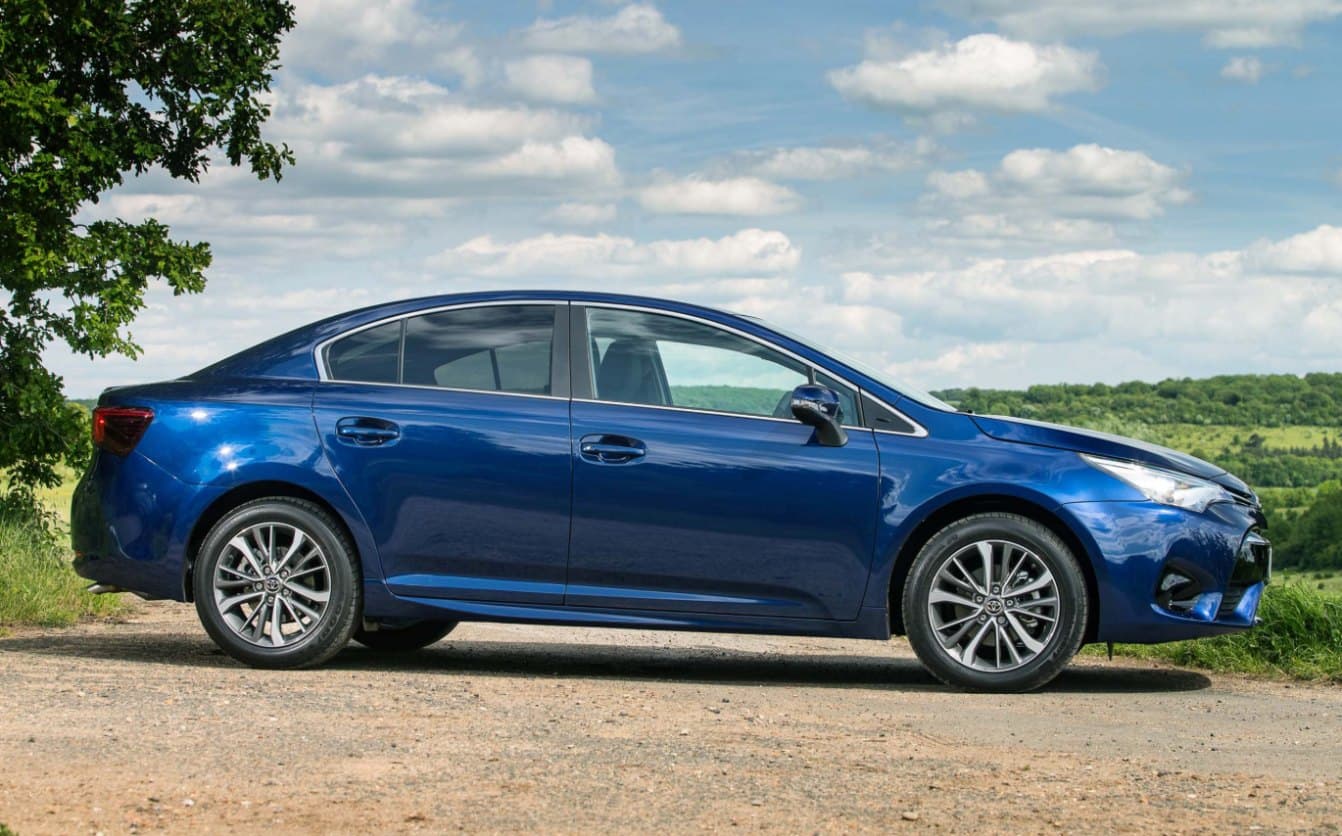
The Toyota Avensis was Toyota's family saloon and estate in Europe for more than 20 years, and it is still a familiar sight on Irish roads and on the used market, often as a high-mileage diesel at a modest price. Its reputation for durability is strong, but every car has weak points and the Avensis has been part of several large Toyota recalls in Ireland. This guide to Toyota Avensis common problems in Ireland covers each generation, the recalls reported for Irish cars, and a practical checklist for buying one today.
Quick Summary
- The Avensis was sold in Europe from 1997 to 2018 across three generations. From 2003 it was built exclusively at Toyota's Burnaston plant in Derbyshire, England.
- In February 2010 the Avensis was one of eight Toyota models in an Irish accelerator pedal recall that covered 26,000 cars built between February 2005 and January 2010.
- Avensis cars were also part of Takata passenger airbag recalls in Ireland: more than 20,000 Toyotas in 2014 (built November 2000 to March 2004) and 11,943 Toyotas in 2019 (built February 2001 to July 2008).
- The Road Safety Authority's recall lists for 2023 to 2026 do not include an Avensis campaign.
- On any used Avensis, check recall completion with a Toyota dealer, service history, the condition of diesel engines and clutches, and rust on older cars.
Looking for one? Browse used Toyota cars for sale on EcoSteer, or compare used diesel cars for sale on EcoSteer if you want a long-distance cruiser like the Avensis.
Toyota Avensis in Ireland: a quick history
Toyota launched the Avensis in October 1997 as the replacement for the Carina E, and it became a core Toyota model for Europe. According to Toyota UK, it was sold in three generations and production ended in 2018, with 301,675 sold in the UK alone. Irish buyers bought it in saloon and estate (Tourer) form, and many were used as company cars and taxis, which is why high mileages are common.
| Generation | Years | Key points |
|---|---|---|
| First | 1997 to 2003 | Replaced the Carina E. Launched with 1.6, 1.8 and 2.0 petrol engines and a 2.0 diesel. An August 2000 update added VVT-i petrol engines and the first European use of Toyota's D-4D common-rail diesel. |
| Second | 2003 to 2009 | Launched in March 2003 and built exclusively at Burnaston as a saloon, hatchback and Tourer estate. 2.0 D-4D diesel from May 2003, with more powerful 2.2-litre diesels added later. Revised in July 2006. |
| Third | 2009 to 2018 | Revealed at the Paris motor show in October 2008 and on sale from January 2009, with Valvematic petrol engines and revised diesels. Facelifted in 2011 and again in 2015, when 1.6 and 2.0 D-4D diesels were introduced. |
Toyota Avensis recalls in Ireland
The Avensis has been included in several large Toyota recalls in Ireland. Most are now many years old, but used cars change hands often, so it is worth confirming that the work was done. The recalls below were reported for Irish cars by Irish media at the time.
| Date | Issue | Irish cars | Build period |
|---|---|---|---|
| February 2010 | Accelerator pedal could stick in some cases | 26,000 (eight models incl. Avensis) | February 2005 to January 2010 |
| June 2014 | Takata passenger airbag inflators could deploy abnormally | Over 20,000 (Yaris, Corolla, Avensis) | November 2000 to March 2004 |
| October 2019 | Takata passenger airbag inflators fitted as like-for-like replacements under an earlier recall | 11,943 (Avensis, Avensis Verso, Corolla, Yaris) | February 2001 to July 2008 |
Accelerator pedal recall (2010)
In early 2010 Toyota recalled cars across Europe because the accelerator pedal could, in some instances, stick. In Ireland the recall covered 26,000 cars across the iQ, Aygo, Yaris, Auris, Corolla, Verso, Avensis and RAV4, built between February 2005 and January 2010. Dealers carried out the check free of charge and the procedure took about 20 minutes.
Takata passenger airbag recalls (2014 and 2019)
The Avensis was part of the worldwide Takata airbag problem. In June 2014 Toyota recalled slightly over 20,000 cars in Ireland, covering Yaris, Corolla and Avensis models built between November 2000 and March 2004, because the passenger airbag inflators could deploy abnormally in a crash.
In October 2019 a further recall covered 11,943 Avensis, Avensis Verso, Corolla and Yaris cars in Ireland built between February 2001 and July 2008. These cars had received like-for-like replacement passenger airbags under a previous recall. Takata said its propellant can degrade after long exposure to high humidity, high temperatures and temperature cycling, and an inflator rupture could send metal fragments into the cabin. Toyota Ireland contacted owners by post and carried out the work free of charge at Toyota dealers and authorised repairers.
Recent recall records
We checked the Road Safety Authority's published recall lists for 2023, 2024, 2025 and 2026. None of them includes a Toyota Avensis campaign. That does not guarantee every car has had all earlier recall work done, so always check the individual car.
How to check if a recall has been done
- Use the VIN: Toyota Ireland's recall checker at toyota.ie lets you enter a vehicle identification number and see whether a car is affected. A Toyota dealer can also run the check.
- Ask for paperwork: recall work is usually recorded on a dealer invoice or in the service history. Ask the seller for proof, especially on 2001 to 2008 cars covered by the airbag recalls.
- Imported cars: a UK import may have had recall work recorded in the UK. Ask a Toyota dealer to confirm the status, and confirm VRT has been paid.
Other things to check on a used Avensis
Beyond recalls, most problems on an older Avensis come down to age, mileage and maintenance rather than a single known fault. These checks help you spot a tired car.
Diesel engines
Many Irish Avensis cars are D-4D diesels with high mileage. On a test drive, look for heavy smoke under acceleration, a rough idle, warning lights on the dashboard and any hesitation when pulling away. A cold start tells you more than a warm one, so ask the seller not to run the engine before you arrive. Check the service history for regular oil changes, because diesel engines suffer if services are missed.
Clutch and gearbox
On manual cars, check the clutch biting point and listen for rattles or judder when pulling away in first gear. Change through every gear, including reverse. On automatics, the changes should be smooth with no slipping or delays.
Suspension, brakes and tyres
Listen for knocks over bumps, which can point to worn suspension parts, and check for uneven tyre wear that can suggest alignment problems. Look at the brake discs for heavy lips or corrosion.
Rust and bodywork
The newest Avensis is now around eight years old and the oldest cars are well over 20. Look underneath at the sills, subframes and brake lines, and around the wheel arches and boot lid. Check panel gaps and paint colour for signs of accident repair.
Electrics and comfort
Test the air conditioning, electric windows, central locking and any touchscreen or navigation system. Faults here are rarely dangerous but can be expensive to put right.
NCT and paperwork
Check the NCT certificate and its expiry date, and make sure the vehicle registration certificate (VRC) matches the car, including engine size and fuel type. A full service history and a mileage that makes sense against NCT records are good signs. Our guide on how to pass the NCT first time covers the most common failure points.
Safety record
Safety was one of the Avensis's strengths when new. Toyota UK says the second-generation car set a new record score for adult occupant protection in Euro NCAP testing when it was launched in 2003, and that the 2015 facelift made the Avensis the third successive generation to secure a five-star Euro NCAP rating. Bear in mind that Euro NCAP tests have become much tougher since then, so a ten or twenty-year-old rating is not directly comparable with a modern car. On an older Avensis, the most important safety check is that the airbag recall work has been completed, because a faulty inflator can turn a minor crash into a serious one.
Also check that every seatbelt retracts and latches properly, that the airbag warning light comes on briefly and then goes out when you start the car, and that the tyres are a matching, good-quality set with legal tread.
Which Avensis should you buy?
The third-generation car (2009 to 2018) is the newest and most widely available, and Toyota UK says the 2015 facelift made it the third successive generation of Avensis to earn a five-star Euro NCAP rating. Second-generation cars are cheaper, but every one built between 2003 and 2008 falls inside the 2019 airbag recall window, so proof of completed recall work is essential. For any Avensis, buy on condition, history and recall status rather than age alone.
If you want a similar Toyota with a hybrid option, read our Toyota Auris common problems guide or see our Toyota Corolla model guide.
Is a used Toyota Avensis right for you?
A well-maintained Avensis is a comfortable, spacious car for long-distance driving, and it is often good value. It suits buyers who cover high mileages, want a large boot and are happy with an older car. The keys are simple: confirm the airbag and pedal recalls have been done, check the service history, and inspect the engine, clutch and underside carefully. Compare prices on used Toyota cars on EcoSteer before you buy.
Frequently asked questions
Is the Toyota Avensis a reliable car?
The Avensis has a reputation for durability, and many Irish cars have covered very high mileages. Reliability on a used car depends mostly on maintenance, so look for a full service history and check that all recall work has been completed.
Has the Toyota Avensis been recalled in Ireland?
Yes. The Avensis was part of a 2010 accelerator pedal recall covering 26,000 Toyotas in Ireland, and Takata passenger airbag recalls in 2014 and 2019. The Road Safety Authority's recall lists for 2023 to 2026 do not include an Avensis campaign.
Which Avensis years are affected by the airbag recall?
The October 2019 Irish recall covered Avensis, Avensis Verso, Corolla and Yaris cars built between February 2001 and July 2008. The June 2014 recall covered cars built between November 2000 and March 2004.
How do I check if my Avensis has an open recall?
Use Toyota Ireland's online recall checker with the car's VIN, or ask any Toyota dealer to check it. Recall repairs are carried out free of charge.
When did Toyota stop making the Avensis?
Production of the Avensis ended in 2018 after three generations. The third generation was sold from January 2009 and facelifted in 2011 and 2015.
Sources
- Toyota UK: History of the Toyota Avensis
- Toyota UK Media: Avensis archive
- The Irish Times: Toyota recalls 26,000 cars in Ireland (February 2010)
- The Irish Times: Toyota to recall over 20,000 cars in Ireland for airbag defects (June 2014)
- The Irish Times: Almost 12,000 Toyota cars recalled over airbag concern (October 2019)
- RSA: Recalls by manufacturer (2025)
Related articles
Related models
Toyota Auris Common Problems in Ireland: Recalls and What to Check
Related models
Toyota Prius Common Problems in Ireland: Recalls and Checks
Related models
Kia Sorento Common Problems in Ireland: Recalls and What to Check
Comments
No comments yet — be the first to join the conversation.